


Paid Memberships Aren’t Just for Your Superfans
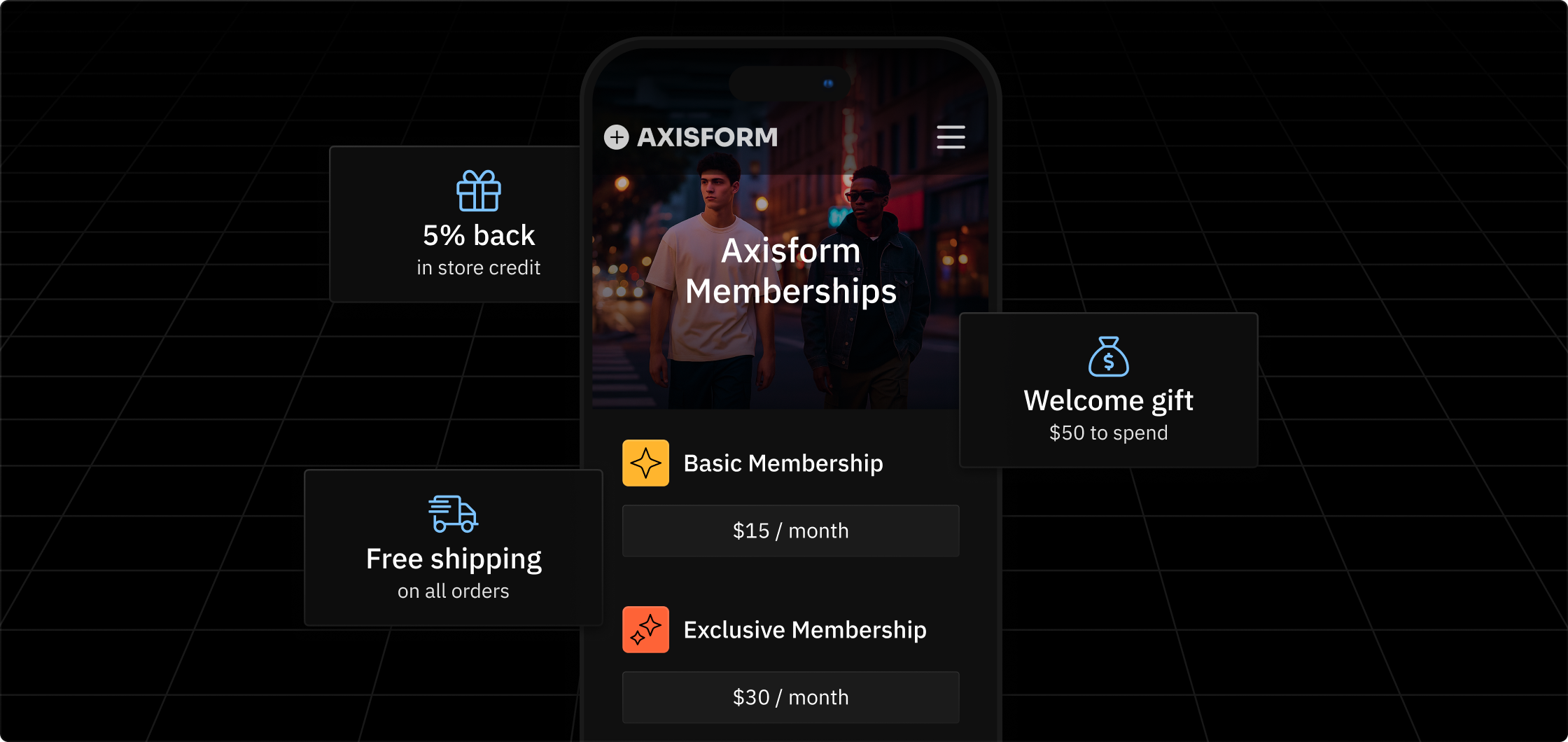
The major value of a paid membership program isn’t normally the subscription fees. It’s the acceleration in repeat purchase frequency that occurs among program members. A paid membership is a committment device that deepens engagement and compels members to buy again to ‘get their money’s worth’.
Ask most Shopify brands when they’d launch a paid membership and you’ll frequently hear a version of the same answer: “once we’ve got a big enough base of loyal customers to sell it to.” At face value, the logic seems sound. A membership is a premium thing; premium things are for your best people; so you wait until you have enough best people to make it worth the effort.
For many brands, it’s exactly the wrong way round.
The biggest incremental returns from a paid membership normally don’t come from your existing Superfans — they were coming back anyway. They come from accelerating your rates of repeat purchase among your existing first and second-time customers. Configured correctly and presented well, a paid membership program can be one of the most effective tools you have for manufacturing loyalty in new customers.
To see why, you have to stop thinking about the fee.
The fee is not the point
Here’s the reframe that changes everything: the membership fee is not the return. It’s a commitment device.
A paid membership works because of what happens in a customer’s head the moment they pay. Once someone has handed over a fee to join, two things kick in at once. They feel compelled to get their money’s worth, so they buy more often to justify the spend. And they become more emotionally invested in the brand simply by virtue of having opted in. That lift in purchase frequency — not the fee itself — is where the overwhelming majority of the membership program value comes from.
This is why the “wait for loyal customers” instinct backfires. Your existing Superfans already buy frequently; a membership will struggle to lift behaviour that’s already at the ceiling. But a customer who’s bought once or twice and might otherwise have drifted? The commitment device works hardest exactly there. The membership gives a shaky, early-stage relationship a reason to become a habit.
The fee’s secondary job is helpful but minor: it can partly offset the cost of the rewards you’re giving away. That’s a nice-to-have. Judge the program on how much more members buy, not on the revenue the fee itself brings in.
Two ways to structure it
A membership can be your entire loyalty program, or a single paid tier sitting inside a free one. Here’s how to break it down:
| Standalone membership | Hybrid membership | |
|---|---|---|
| What is is | The membership is the program — customers pay to join and get benefits | A paid tier integrated within a free-to-join loyalty program |
| Best for | Brands whose value proposition is strong and clear enough to convert on the fee alone | Brands that want earned tiers driving aspiration and a paid tier driving commitment, in one program |
| Main advantage | Simple and focused — one offer, easy to communicate | Best of both worlds: the fee generates commitment upfront while the earn-only top tier drives purchase acceleration |
| Watch out for | If the value isn’t obviously worth the fee, no one joins and you have no program | The paid tier can’t undermine the spend requirements of the earned tiers above it |
For most brands testing the waters, the hybrid model is the safer entry point. You keep a free program running for everyone and offer the paid tier as an upgrade, so a soft launch can’t leave you with no program at all.
How to price it (and why “near break-even” is deliberate)
Pricing is where membership strategy often falls over. Price too high and no one joins; price too low and the rewards bleed margin. The good news is that the right range is a calculation, anchored on three numbers. Take an illustrative member: $80 average order value, a 10% standing cashback rate, buying 3 times a year — $240 of annual spend.
| Anchor | What it tells you | How to work it out | This example |
|---|---|---|---|
| Break-even floor | What a member saves at their current purchase frequency | Per-order savings × annual order frequency | ($80 × 10%) × 3 = $24 saved/year |
| Recoup window | Members should see a clear path to recovering the fee within 1–2 orders | Front-loaded benefit value against the fee | A $30 welcome gift recoups a $24 fee before the first order |
| Spend ceiling | A gut-check that the price sits in a defensible range | Fee against ~10% of average annual spend | 10% of $240 = $24 upper guide |
Here’s the counterintuitive part. Price the fee near the break-even floor (~$24 in this example) and at the member’s current behaviour, the fee is essentially a wash. They save roughly what they paid.
That’s the point. If the member does nothing differently, they break even and you break even. But the membership exists to change behaviour, and every additional order the commitment drives on top of their old frequency is pure upside. The pricing math sets a fee that’s demonstrably fair. The frequency lift is the return. You’re not trying to profit on the fee, you’re trying to buy the commitment that makes them buy more.
Let your repeat rate set the aggression
How low you can go depends on one thing: how confident you are that members will actually buy more. Your existing repeat purchase rate is the honest gauge of that confidence, and it should pull your pricing in opposite directions at the two extremes:
| Anchor | What it tells you | How to work it out |
|---|---|---|
| Price | Near the true cost of the rewards — you can’t yet count on extra orders to fund them, so don’t lose money per member | Low — these customers already come back, so the fee’s only job is to secure commitment. Make it an easy yes |
| Value delivery | Front-load it — welcome gift or first-order perk, so a new member sees the worth before deciding the brand is worth repeating | Optimize for sign-ups — every member reliably converts to more orders, so get as many through the door as possible |
| What you optimize | Each membership on its own economics — don’t bank on aggregate lift to rescue an underpriced fee | Volume — the extra purchases more than cover the rewards, so the fee never needed to recover those costs alone |
Notice that neither posture says “only sell this to loyal customers.” A low repeat rate doesn’t disqualify you from running a membership it just tells you to price closer to cost and front-load the value until you’ve earned the confidence to price for volume.
Four principles that carry the program
Pulling it together, four ideas do most of the heavy lifting:
- The fee is a commitment device. Its job is to get customers invested, not to generate revenue. Judge the program on how much more members buy, full stop.
- Price for perceived value and a quick return. Members join when the value clearly beats the fee and they can recover it fast. Price against what the membership feels worth, not just what the rewards cost.
- First-time buyers are the norm, not the exception. A membership is not a reward for existing loyalty. Presented well, it converts new customers on their very first order — which is where the biggest frequency gains live.
- Sell it everywhere. A paid tier only works at scale. Surface it at checkout, in the post-purchase moment, and in the account area — not on a page no one visits.
That third principle is the whole argument in one line, and it’s worth sitting with because it inverts the default instinct. The most valuable moment to offer a membership is not after a customer has proven their loyalty. In fact, it’s at the point of first purchase, when a small commitment can bend the entire trajectory of the relationship. Wait until someone is already a superfan and you’ve missed the window where the membership could have done its real work.
The takeaway
The brands getting the most out of paid memberships aren’t the ones with the biggest loyal followings. They’re the ones who understand what a membership is actually for: not rewarding loyalty that already exists, but creating it in customers who haven’t committed yet. The fee buys commitment. Commitment drives frequency. Frequency is the return.
So the question isn’t “do we have enough loyal customers to justify a membership?” It’s “how many first- and second-time buyers are slipping away that a small, fair commitment could have turned into repeat customers?” For most brands, that number is a lot bigger than the superfan count and it’s the number a membership is built to move.