


How Loyalty Programs Lift Brand Visibility in the Age of AI Commerce
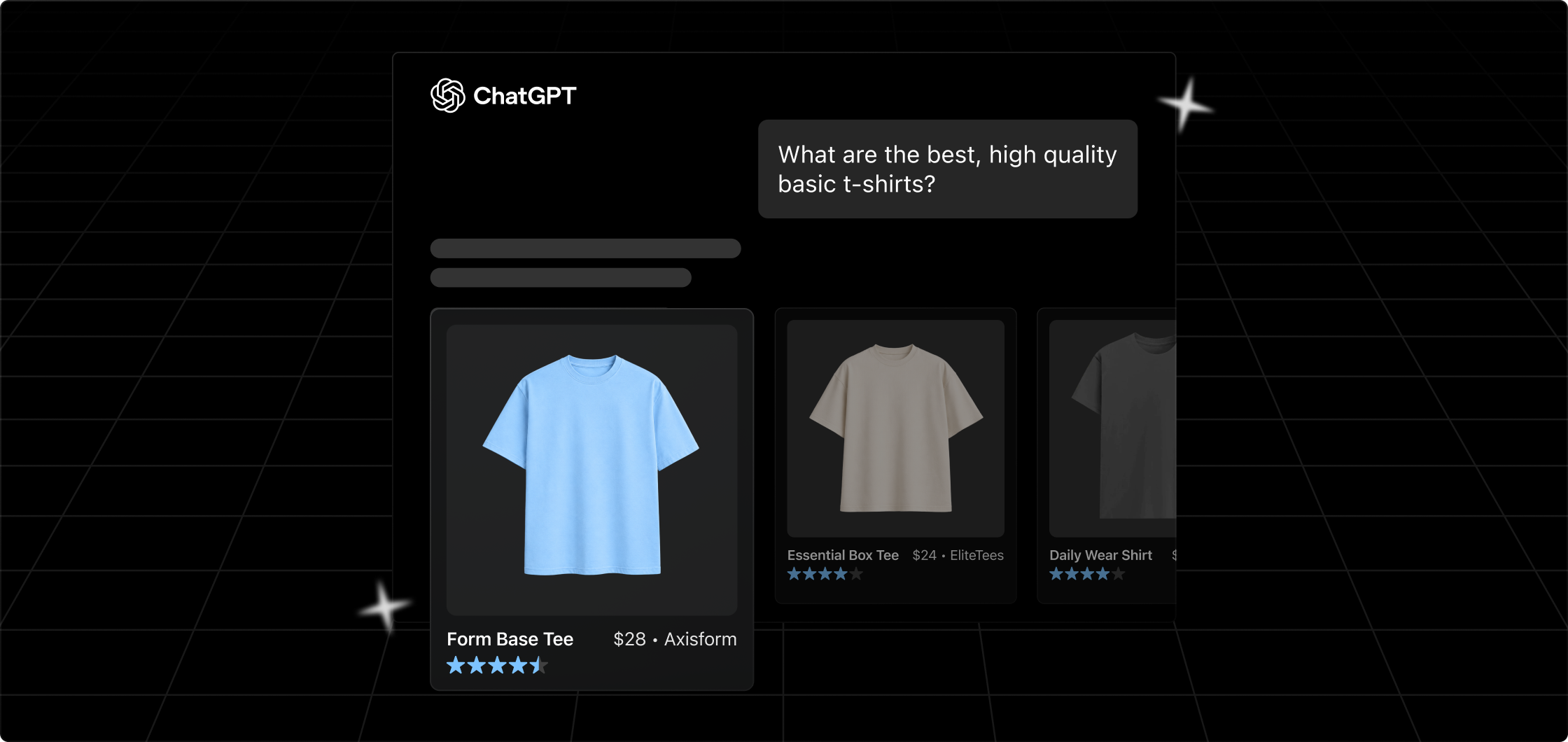
Loyalty programs enable brands to deepen customer engagement. This translates to an increase in reviews, customer-generated photos and videos, comments, Q&A and general community participation. AI platforms weigh UGC and community signals heavily when determining brands and products to recommend. A strong loyalty program, means more customer content which, in turn, drives improved AI search visibility and new shopper acquisition.
For twenty years, being found online meant winning at search. You optimized for Google, you bought the keywords your competitors were bidding on, and you fought for a spot on page one. That game isn’t over, but a new one has started alongside it and the rules are different in a way that should change how you think about loyalty.
More and more shoppers now begin not with a search box but with a question to an AI assistant: “What’s the best power bank for a long hike?” “Which humidifier is good for allergies?” The assistant doesn’t return ten blue links for the shopper to sift through. It returns a verdict, a shortlist, sometimes a single recommendation. And the brands that don’t appear in that answer are, for that shopper, invisible at the exact moment of decision.
This is agentic commerce, and it presents Shopify brands with a familiar-feeling opportunity and an equally familiar trap.
What AI actually reads before it recommends you
Here’s the part most brands haven’t internalised. When an LLM decides which product to put in its answer, it does not lean hardest on your carefully written product descriptions. It leans on evidence of real human experience, reviews, user-generated content, and community discussion because that’s the signal it trusts.
The data behind this is now hard to ignore:
- UGC and community platforms collectively drive close to half of all citations in AI search, according to an AirOps analysis of 5.5 million AI-generated answers, and the most-cited domains skew heavily toward experience-based content.
- Reddit is the single most-cited UGC platform, appearing in roughly 47% of Perplexity responses and around 21% of Google AI Overviews.
- Bazaarvoice research from late 2025 found that 62% of shoppers trust product recommendations most when they’re backed by reviews and photos from real, verified purchasers and that most shoppers need somewhere between 6 and 10 reviews before they’ll trust an AI’s suggestion.
The mechanism is straightforward once you see it. LLMs treat reviews and UGC as trust signals, and they increasingly apply reliability weighting to the content they ingest to guard against acting on flawed or stale data. Real customer language fills the gaps your marketing copy can’t credibly fill e.g. how the product performs in the wild, whether it lasts, who it’s actually for. Reviews also matter because they’re fresh: static product pages rarely change, but reviews provide a continuous stream of timestamped, specific text, and recency is a heavy factor, with roughly 65% of citations drawn from content less than a year old.
Put bluntly: a deep, recent, credible body of customer content is becoming a AI ranking signal. Not a nice-to-have for conversion but a determinant of whether the machine surfaces you at all.
Why this makes loyalty an acquisition strategy
The conventional view treats loyalty as backward-looking: a way to squeeze more orders out of customers you’ve already won.
That’s still true and valuable. But in an AI-mediated market, an engaged community of loyal customers does something more powerful. It produces the exact signal that makes you discoverable to new shoppers.
Think about who writes your reviews, posts the photos and videos, answers questions in your community, and talks about you on Reddit and TikTok. It’s not your one-time buyers. It’s your repeat customers and your superfans; the custom segment a loyalty program is designed to engage and activate. The more engaged that community, the more high-quality, recent, authentic content exists about your brand for an LLM to read and cite.
So the causal chain runs like this:
- A Loyalty program helps build an engaged community;
- That community generates reviews, UGC and peer content;
- That content is what AI assistants weigh when they decide what to recommend;
- Those recommendations drive new customer acquisition; and a share of those new customers become loyal, and start producing content of their own.
That’s a genuinely different way to justify loyalty investment. The ROI isn’t only the repeat revenue from members, it’s now also the acquisition value you earn by becoming the brand the AI trusts enough to name.
Building the engine, not just the audience
If reviews and community are the fuel, a loyalty program is the machine that produces them reliably rather than by luck. The mechanics that matter here are the ones that reward participation, not just spending:
- Reward the content, not only the purchase. Earning rules that give points or direct rewards for leaving a review, posting a photo, sharing UGC, or completing a profile turn your best customers into a steady content supply, the raw material AI discovery runs on.
- Use challenges and community activities to drive volume and recency. Because recency carries real weight in AI citations, a program that keeps members continuously active — through challenges, streaks and community moments — keeps your body of content fresh rather than letting it age out.
- Make status visible. Badges displayed publicly on a member’s reviews do double duty: they signal to human shoppers that a real, committed community exists, and they mark that content as coming from an authentic, verified voice which is exactly the credibility signal both people and machines are looking for.
- Turn referrals into reach. Referral rewards extend your community’s voice into the operated and third-party spaces e.g. social, community platforms, word of mouth etc that LLMs weight heavily precisely because brands don’t control them.
None of these are new loyalty mechanics. What’s new is the second job they’re now doing. A review coupon used to be a conversion tactic. Today it’s also an AI-visibility tactic. A community challenge used to be about engagement. Today it’s also about keeping your citation base fresh.
The durable edge
There’s a deeper reason to lean into this now. LLMs will keep surfacing new choices and new competitors to your customers at scale, that’s what they’re built to do. In that environment, the brands that hold their ground are the ones that have built and maintained direct, one-to-one relationships. When a customer already belongs to your community, has status in your program, and has a reason to come back to you specifically, the AI’s endless menu of alternatives has less pull. Mindshare is what sustains above-average repeat purchase when everything else is being commoditised into a comparison table.
That relationship is the one asset in this whole picture that no platform can revoke. Your ad spend on an AI channel can be repriced overnight. Your visibility in an answer can shift with a model update. But a loyal, engaged community — and the content it produces — is yours, and it happens to be the very thing that keeps you visible in the channels you don’t own.
The takeaway
The brands that win the next decade won’t be the ones with the cleverest prompt-optimisation hacks, those will be commoditised fast. They’ll be the ones that double down on loyalty and community, because that’s what produces the authentic, recent, credible customer voice that AI assistants trust, and that’s what preserves the direct relationship between brand and customer that survives whatever the platforms do next.